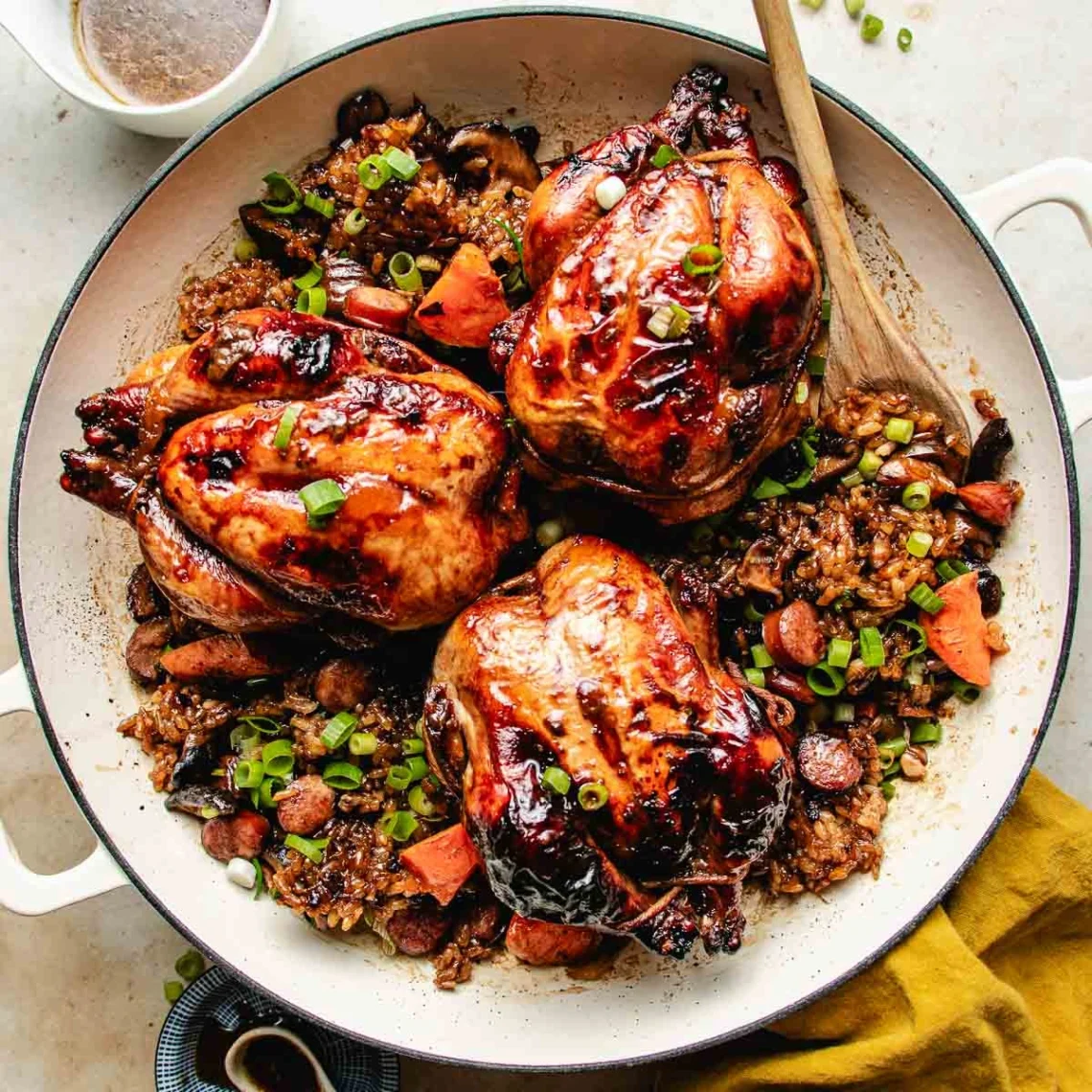
The buttery lemon-herb flavor, the enjoyable crunch of the wings, and the tenderness of the meat brings the feeling of a holiday meal to any weeknight. With Cornish hens being smaller than an average whole chicken, these hens take less time to roast. Serve an enjoyable main dish that takes less than 1 hour of prepping and cooking.
What is a Cornish Hen?
Each chicken is less than 1.5 pounds, with the average being closer to 1 pound. This smaller size means that each member of the family can receive their own bird. Cornish hens can often dry out before the meal is served, so keep your eye on the clock.
As you craft your cornish hen recipe, consider the following to prevent your dish from falling flat:
- the temperature of the oven should be high to ensure achieves the level of crispiness you wish for the skin
- a seasoning that is based in a fat (a fat-based seasoning)
- the meat of the chicken must reach the appropriate temperature to ensure that you do not serve chicken to your guests that is too juicy
Things You’ll Need
- Baking sheet
- Wire Rack (a crispier skin is preferable)
- Paper towels
- Small bowl
- Kitchen Twine (used for trussing)
- Thermometer (highly recommended)
If bowl-style dinners is your family’s favourite, you may also be interested in “Greek Ground Turkey Rice Bowls.”
Key Ingredients (and Smart Swaps)
Use these ingredients to create your best cornish hen recipe:
- Cornish hens: thaw completely if frozen
- Butter (softened) + olive oil: butter adds to flavor and oil promotes the browning
- Garlic: fresh is best; alternatively, use 1 tsp garlic powder
- Lemon: the zest and juice can improve the flavor of the meat
- Herbs: Italian seasoning can be used with rosemary and thyme
- Seasonings: in comparison to other seasonings, paprika is great to achieve color and a mild spicy flavor
Step 2: Cornish Hen Recipe (Roasted Lemon Herb)
Serving Size
2 Cornish hens (serves 4, depending on sides)
Ingredients
- 2 Cornish hens (about 1 to 1 1/2 lb each / 450–680 g) (thawed)
- 2 tbsp unsalted butter (softened)
- 1 tbsp olive oil
- 3 (minced) cloves of garlic
- 1 tsp (of the) zest from a lemon
- 2 tbsp (of) the juice from a lemon
- 1 tsp dried thyme (or 1 tbsp fresh)
- 1 tsp dried rosemary (or 1 tbsp fresh, chopped)
- 1 tsp paprika
- 1 1/2 tsp salt (adjust to taste)
- 1/2 tsp black pepper
Aromatics (aggravate the oven cavity)
- 1/2 lemon (juice side in and)
- Over the use of garlic cloves
- Over the uses of herb sprigs
Step-by-Step Instructions
Step 1: Preheat your oven.
Start by preheating the oven to 425°F (220°C). While you ‘re doing that, move your oven rack to the center and put a rimmed baking sheet on the rack to help with browning.
HENS DRYING STEP 2
Next, you will want to take some paper towels and nonchalantly dry each hen. This step will help the skin develop its own protection against the steam and help develop the crispy skin we want.
HENS SEASONING STEP 3
You will want to make a mixture of butter, olive oil, and some aromatic seasoning. Aromatic seasoning consists of garlic, lemon zest, lemon juice, your choice of herbs, paprika, and salt & pepper. Mix these and rub the hens inside of the cavity, all on the spots of skin, and inside of the breast. Try your best to not break the skin, but the rub will help flavor the skin. This step will be the baseline step of flavoring the skins. If you are also using cavity spices, you can place them inside. If you want, you can tie the hens to help them keep their structure.
STEP 4: HENS ROASTING
Get your cornish hens and place them in the oven on the roasting rack. Let the oven do its magic while you wait a minimum of 35 minutes for the skin to develop roasting spices and protection. The thickest part of the breast must be a temperature of 165° F or 74° C. This will be the perfect time for the cornish hens recipe to develop its juices and help it have protection from the spices.
STEP 5: HENS RESTING
After 10 minutes of being out of the oven the juices will be resting and the skin will have a clean cut.
Best Sides to Serve
- Mashed potatoes or roasted potatoes
- Rice pilaf or quinoa
- Roasted carrots, Brussels sprouts, or green beans
- Simple salad with a light vinaigrette
Also, keep it bright with some lemon for a buttery flavor.
Easy Variations
1) Garlic-butter “extra crispy” version
Get extra butter (3 tablespoons) and extra paprika (1 teaspoon). For best results, place the cornish hens on the roasting rack.
2) Spatchcock for faster cooking
To spatchcock your Cornish hen, use kitchen shears to cut out the hen’s backbone. Spatchcocking Cornish hens is faster than cooking whole hens because Cornish hens cook faster than whole hens. It will sometimes take 25 to 35 minutes at 425°F (220°C) to cook spatchcocked hens.
3) Honey Dijon Glaze
To make Honey Dijon glaze, add 1 tablespoon each of honey and Dijon mustard, and brush it on just 10 minutes before cooking is scheduled to finish. Honey darkens quickly, so watch the hens to ensure they don’t get overly browned.
4) Cajun-StyleHens
For Cajun-style Cornish hens, use Cajun seasoning. (1 1/2 teaspoons of Cajun seasoning should work.) Also, if your type of seasoning is more salty than others, omit the additional salt.
Make-Ahead and Storage
The Cornish hen recipe can be made more quickly if prepped in advance.
- Combine all of the cooking ingredients. Doing this up to 12 hours before cooking is best to dry the hens out the skin before cooking. Season them.
- Cook the seasoned hens as specified in the instructions.
Storing leftovers
- The Cornish hens remain edible in the fridge for up to 3 days.
- To reheat, cover the cooking vessels with foil and place at 325°F (165°C) for a while. To re-crisp the skin, place the foil aside.
Troubleshooting
My hens are dry
This is indicative of hens that are likely done, so use a thermometer to ensure correctness. Why pull your hens at 165°F (74°C) during temping.
The skin isn’t crispy
This likely is because the birds were too wet. To make up for it, dry them completely, avoid crowding the pan, and roast the vessels on a cooking rack.
The legs are done, but the breasts need more time
This is indicative of uneven cooking. Use a foil to cover the hens’ breasts if it starts browning too much during the process.
The garlic burned
The high heat may scorch garlic. Try mixing the garlic into the butter under the skin. Outside skin rub can be left simpler.
Frequently Asked Questions
How many does one Cornish hen feed?
One hen generally serves one person, but can stretch to two with sides. Need to bribe with sides or tummies too.
Cooking Cornish hens still frozen?
This isn’t recommended for even cooking. Better to thaw overnight in the fridge for optimal texture.
Is brining necessary?
It’s not a must. Attempt a short dry brine. It can both elevate and balance flavors and the texture. This cornish hen recipe keeps the hen juicy, and temperature. Therefore, don’t bother brining.
Conclusion
This cornish hen recipe gives a time efficient, quick, look-at-me dinner. Simply dry the skin, spread herb-lemon butter, put in the oven at high temps, and grab the hen when its done. Once you get the hang of the timing of everything, get creative with the spicing and switch up sides. A simple, fancy dinner.