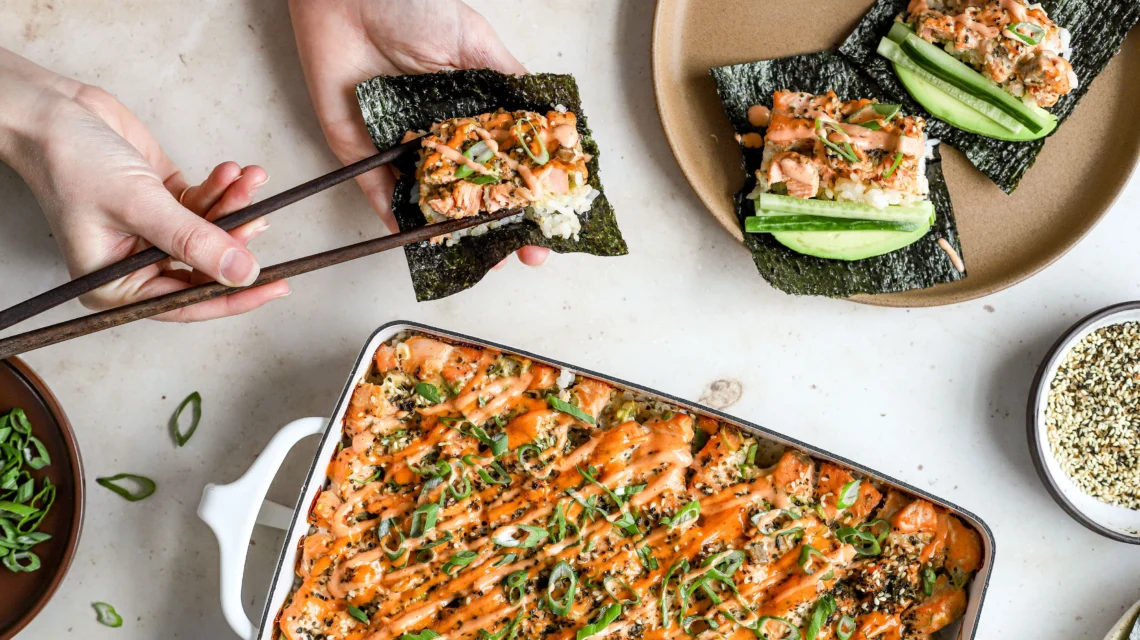
Sorry rolling your own sushi is too much work. Lucky for you, this sushi bake recipe aims to replicate the flavors of sushi, making it the perfect solution. The base consists of seasoned sushi rice, an optional creamy spread of salmon or a plastic crab, and finishes with a spicy mayo topping, all baked to be warm and final fusion of flavors. Nori is then spread alongside to allow each person to make their own bite-sized sushi, making it perfect for family gatherings and parties.
What Is a Sushi Bake?
A sushi bake is similar to a sushi casserole, both containing layers of baked goods rather heavily inspired by sushi. With this recipe, instead of sushi rolls, you spread sushi rice, throw on a layer of your salmon or crab mixture spreads, and bake to combine flavors (heating is the goal). The final product is soft and meant to be [] scooped v. firmly sliced like a piece of lasagna.
Equipment You’ll Need
- 9×13-inch baking dish (or similar)
- Rice cooker (or pot)
- Mixing bowls
- Spatula
- Measuring cups/spoons
- Optional squeeze bottle for spicy mayo (if you wanna get fancy)
Having a party soon? While you’re making this, you can also click here for a Shirley Temple recipe to add to the party spread.
Key Ingredients (and Smart Swaps)
Being diverse and complex is key to this sushi bake recipe. These are the essential key ingredients:
- Sushi rice (or short-grain rice): Rice must be sticky enough to remain clumpy so it can be scooped easily C.
- You can use jasmine rice as a substitute, but the texture might be a tad looser.
- Rice vinegar + sugar + salt: adds authentic sushi seasoning to rice
- Salmon or imitation crab: traditional toppings
- Use canned salmon or tuna for an even cheaper option.
- Japanese mayo (Kewpie) or regular mayo: creamy base
- Cream cheese: optional, but it adds richness and “baked sushi” vibe
- Sriracha (or chili sauce): adds heat
- Furikake: adds savory seaweed-sesame flavor
- Nori sheets: essential for serving (scoop and wrap)
Sushi Bake Recipe (9×13 Pan)
Yield
6–8 servings
Ingredients
Sushi rice layer
- 2 cups uncooked sushi rice (short-grain), rinsed
- 2 1/2 cups water (or per package)
- 1/4 cup rice vinegar
- 1 tbsp sugar
- 1 tsp salt
Seafood topping
- 1 1/2 lb (680 g) salmon fillet, cooked and flaked or 12 oz (340 g) imitation crab, chopped
- 1/2 cup Japanese mayo (or regular mayo)
- 4 oz (115 g) cream cheese, softened (optional)
- 1–2 tbsp sriracha (to taste)
- 1 tsp soy sauce (optional)
- 1 tsp sesame oil (optional)
Topping + serving
- 3–4 tbsp furikake (plus more to finish)
- 2 green onions, sliced
- Optional: sesame seeds, tobiko/masago, diced cucumber, avocado
- Nori sheets (snack-size or full sheets cut into squares)
Step-by-Step Instructions
Step 1: Cook and season the rice
First, cook the rice and let it sit for 5 minutes. Meanwhile, stir rice vinegar, sugar, and salt until dissolved. Fold the vinegar mixture into the rice and let cool.
Step 2: Cook the salmon (if using)
If using salmon, bake it at 400°F (205°C) for 12–15 minutes, (or pan-cook) it until it is cooked through and can be easily flaked. Once cooked through, you should let it cool for a few minutes. After fully cooled, you can use a fork to flake it into smaller pieces.
Tip: If you plan on using imitation crab or canned fish you can skip the cooking step and plan for it to be added directly to the recipe.
Step 3: Mix the creamy topping
To the same bowl that you added the seafood to, you can then add the mayo, cream cheese, (if using), sriracha, and soy sauce/sesame oil (if using) and mix until it is creamy but still a little chunky.
Step 4: Assemble
Lightly grease your baking dish. Then press the seasoned rice into an even layer and sprinkle furikake over the top. Immediately, spread the seafood topping to the edges.
The order of the layering is essential because it is what adds the flavors of sushi into the casserole.
Step 5: Bake
Bake the casserole at 375°F (190°C) for 15–20 minutes until hot throughout the casserole. If you used the salmon, the salmon will be fully cooked through and will reach a safe to eat temperature of 145°F (63°C) in the center.
Step 6: Finish and serve
Top it and garnish it with the green onions on top and even add a little extra furikake on top. After, let it sit for 5–10 minutes because it comes out a lot easier and cleaner. Then serve it with the nori and add optional toppings.
Easy Sauce: Spicy Mayo Drizzle
This is made easily by mixing:
- 1/3 cup mayo
- 1–2 tbsp sriracha
- 1 tsp lemon juice (optional)
Right before you serve it, drizzle it on top.
Also, it adds additional flavor to the sushi bake recipe because it resembles a sushi roll with sauce on top.
Popular Variations
1) California-style (crab + cucumber vibe)
Try imitation crab and diced cucumber after the sushi bake is finished. The cucumber should be added to keep it raw and crunchy.
2) Tuna sushi bake
Try canned tuna. The only thing needed is more mayo. Top it off with more green onions and sesame seeds to finish.
3) Extra spicy version
Feel free to add more sriracha and a touch of red pepper flakes. You can also add chili crisp on top.
4) Crunchy topping
Add tempura flakes or crispy fried onions. It imitates the texture of the crunchy roll.
How to Serve (So It Feels Like Sushi Night)
- Serve a scoop of sushi bake on a square of nori.
- Garnish with avocado or cucumber.
- Close it up like a hand roll.
- It’s intended as a more filling dish, so try encouraging diners to take a lot of nori.
Make-Ahead and Storage
You can prep this sushi baked recipe in advance:
- Pre-assemble and store cold, covering it tightly.
- You can store it cold up to 24 hours in advance.
- Cold storage adds about 5–8 min to bake time.
Leftovers
- Use an airtight container to store in the cold, up to 2–3 days.
- Be cautious and use gentle heat to try and recook the sushi bake. However, store nori away to keep it crisp.
Troubleshooting
It turned out watery
It is possible that the rice was cooked wet to begin with or overcooked. Another possibility would be that the fish had a high moisture content. Either way be mindful of soaking the rice and also ensure that you let cooked salmon cool before mixing.
The rice is dry
If the rice is dry, you can add a couple of tablespoons of water. This water has to be applied to the edges of the rice and then the rice has to be covered before hitting the microwave. This way the rice can be softened, but it won’t be soggy.
It tastes too salty
Adding Japanese rice seasoning and soy sauce can add a lot of salt to a dish. Next time, you can skip the soy sauce and then add whatever Japanese rice seasoning you like that is a low sodium option.
It doesn’t taste ‘sushi-like’ enough
To improve the flavor to be ‘sushi-like’ more plastic sushi rice vinegar can be applied and then a heaping spoon of the rice seasoning added. Obtaining some healthy seaweed can help create a true sushi bake.
Frequently Asked Questions
Can I use brown rice?
Definitely, but bear in mind that it won’t be as sticky in comparison. Short-grain white rice will create the best replica of the sushi bake.
Can I use raw fish?
This bake is ONLY for safely cooked seafood. Cook the salmon, or use crab sticks, or canned seafood and you’ll be on the right path.
Is it gluten-free?
In that likelihood, you’ll just have to double check. Some rice seasoning and some soy sauces have gluten, for example, and then you can substitute Brazilian for the soy sauce.
Conclusion
If you want to serve a crowd with this sushi bake you’ll need to have fluffy rice, the cream of the cooked seafood on top, a sunkissed oven to finish it off, and some seaweed on the side for people to scoop and wrap. Because the more you practice the more you can change the proteins and the temperature, the more you can personalize it each time.