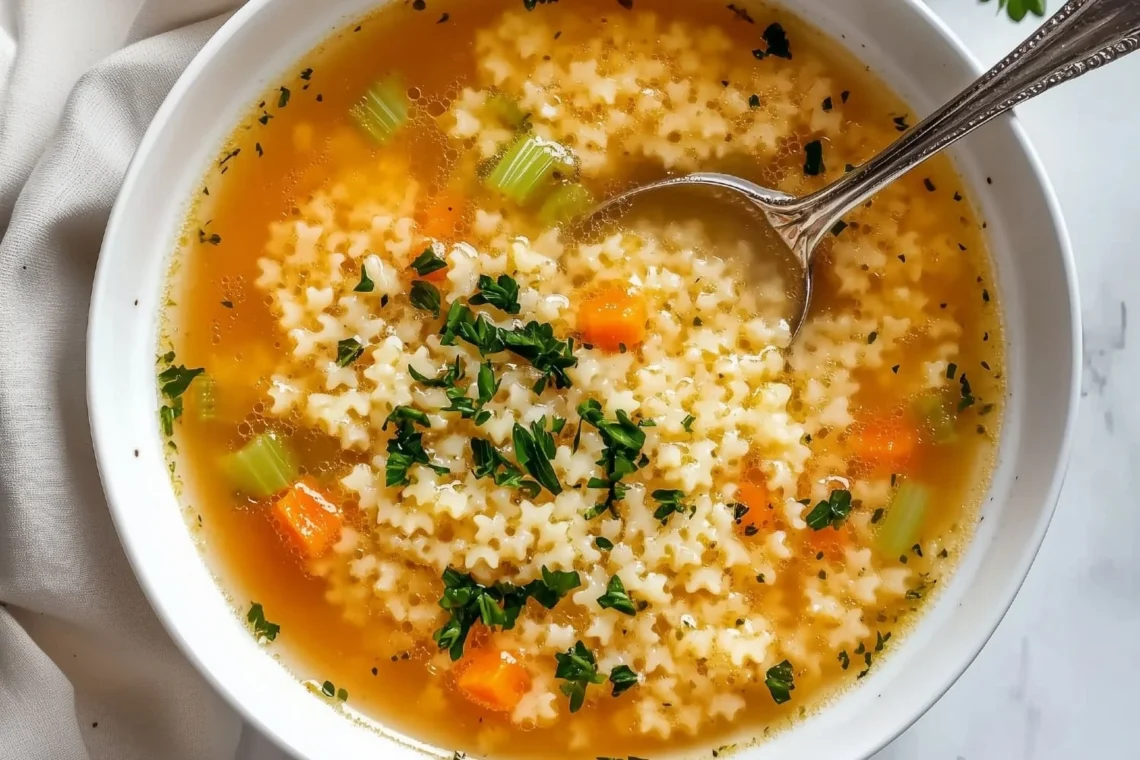
If you’re looking for a quick, cheap meal that’s gentle on the stomach, this “pastina” recipe is for you. The tiny pasta is cooked in broth then mixed with butter and Parmesan for a quick and comforting meal. The ratio in this is adjustable and once you learn it, you can easily make the meal as brothy as you want or as thick as you want like porridge.
What Is Pastina?
Pastina translates to “little pasta” in Italian. It usually refers to the tiny pasta shapes like acini di pepe, (tiny dots) or stelline (stars). Tiny pasta, or “pastina” is often used in quick meals because they are light and turn soft fast. Pastina bowls are comfort food for all ages.
A good pastina recipe is usually:
- creamy (but not from the heavy cream) because of the starch
- savory and buttery (but not greasy)
- stuffed with ingredients that can help with digestion
Equipment You’ll Need
- Small saucepan
- Spoon or silicone spatula
- Measuring cup
- Microplane or grater (for Parmesan)
- Ladle (optional, if you are serving it broth style)
If you like bowls, check out the recipes on our website.
Key Ingredients (and Smart Swaps)
If you want to make this recipe quick and as classic as can be, you’ll need:
- Pastina pasta like acini di pepe, ditalini piccoli, and small pasta.
If you don’t have tiny pasta, orzo is a substitution. It does take a little longer to cook, though.
- Broth – chicken broth is most common. Alternatively, use veggie broth, or water and a pinch more salt.
- Butter – contributes to the silky finish For a substitute, use olive oil. Butter is best for flavor though.
- Parmesan Cheese – adds depth and richness
- Pecorino has a sharper edge and works as well.
- Black pepper – is optional. but a good choice.
- Optional add-ins: a beaten egg to add a richer and a more egg-drop style texture.
Pastina Recipe (Classic Butter + Parmesan)
Yield
2 servings
Ingredients
- 1/2 cup (about 90 g) pastina
- 2 cups (480 ml) chicken broth (preferably low sodium)
- 1 tbsp butter (add more to taste)
- 1/3 cup (30–35 g) finely grated Parmesan, plus more for serving
- Pinch of salt, (only if needed)
- Black pepper, to taste
Step-by-Step Instructions
Step 1: Bring broth to a simmer
Start simmering chicken broth in a small saucepan. Also, taste the broth as if it has a lot of salt, you may choose to not add the extra salt in the recipe.
Step 2: Cook the pastina
Then add pastina to the broth and then rapidly stir to prevent it from sticking. Cook for 5-7 minutes. The broth will slightly reduce and thicken from the pastina starch.
Step 3: Finish with butter and cheese.
- Once cooked, turn off the heat and stir in butter and let it melt. Add the Parmesan and stir until everything is smooth.
- To make it looser, pour in some hot broth. To make it tighter, let it sit for 1-2 minutes. This is called tightening.
- Pastina recipes usually finish with the comfort factor. Alone, broth and pasta don’t taste rich. This makes it interesting.
Texture Brothy vs. Creamy
Pastina soaks up liquid and you have some options.
- Creamy: Stick with the 1/2 cup pastina and 2 cups broth and let it reduce for a brothier consistency.
- Soupier: Add an extra 1/2 cup broth right before serving.
- Silky Smooth: Use 1 3/4 cups and stir continuously toward the end.
Upgrade: Pastina with Egg
Make it cozier, but the egg has to be added slowly to avoid the cooked scrambled curds floating around.
Add to Paste:
- 1 egg, beaten
Process:
- Step one: Cook the pastina to the firm stage.
- Step two: Reduce the heat.
- Step three: Easing and continuously stirring, drizzle in the beaten egg.
- Step four: Finish with the butter and Parmesan.
The pastina recipe finishes with a texture of thick and silky broth, made to mimic Italian egg drop soup.
Variations
1) Pastina with shredded chicken
At the finish, stir in shredded chicken to the serving bowl. Use 1/2 to 1 cup as desired. Finish with a squeeze of lemon.
2) Garlic-butter pastina
Start with 1 minced garlic clove and 1 T butter. Sauté garlic in the butter before adding broth. This version is way more grownup than your basic version.
3) Veggie pastina
Try adding finely diced carrots and/or zucchini. Carrots need a bit more time than zucchini to soften so add carrots first.
4) Milk version (kid-friendly)
Substitute 1/2 cup broth with warm milk. The bowl is creamier and milder with cheese.
All the variations of this pastina recipe follow the same base method so try out different flavors each day.
Serving Suggestions
3 and up with more cheese and a sprinkle of freshly ground black pepper. Top with a splash of olive oil. You’ll want to add a simple side salad to accompany this.
Storage + Reheating
This pastina recipe is best fresh, because, duh, pasta sucks up broth, but leftovers can still work if you reheat correctly.
- Store up to 3 days in the fridge and lid.
- Reheat with broth and a splash of water warming either over the stove or a quick microwave with a stir in between.
Tips
It’s a thick paste
This happens when the pastina absorbs broth, and the thick paste isn’t lookin so hot then you can add more broth to loosen up the entire dish.
It tastes bland
For a burst of flavor, consider adding a bit of salt, especially if using a low-sodium broth, and more pepper and Parmesan. A brief spritz of lemon also perks things up.
It’s too salty
Yes, cheese and broth can pack a salty punch. To help counter this, dilute using water or unsalted broth and add a bit of unsalted butter.
It stuck to the bottom
To prevent this in the future, make sure to stir more frequently in the last 2 minutes to help the starches prevent sticking.
Frequently Asked Questions
What are considered pastina shapes?
Traditionally, pastina shapes are very small. These include smaller pasta shapes like stelline or acini di pepe. However, any smaller pasta shape can work and you can adjust the cooking time to accommodate this.
Can I use water instead of broth?
You can make this a simpler pastina recipe by using water and a generous amount of salt, and relying upon the butter and Parmesan to make up for the flavor of the broth.
Is pastina traditionally soupy?
Pastina can also be thick and eaten with a spoon. It’s up to you how you serve it and you can change the broth amount according to your preference.
Can you freeze pastina?
It’s not the best option because the texture can become really mushy. If freezing, freeze the broth. You can always cook more pastina when you need to.
Conclusion
This pastina recipe is the super quick and perfect example of a recipe that can be done at any point in the day. To achieve a charming texture in this recipe, simply simmer your favorite small shaped pasta in broth, and finish the dish with butter and Parmesan. Also, once you know the built-in ratio, this recipe can definitely be adjustable!! You can make it brothier, even more creamy, and even more eggy, as you wish!!